Maka Medical Surgical
Choosing a reliable Bone Plate supplier in 2026 requires more than comparing unit prices. Global buyers must examine manufacturing evidence, product consistency, regulatory documentation, and clinical suitability. A supplier may offer polished catalogs, yet weak traceability can create serious purchasing concerns. Look beyond photographs.
This guide introduces leading Bone Plate suppliers for hospitals, distributors, and orthopedic device companies. It considers materials such as titanium and stainless steel, plate design, screw compatibility, surface finishing, packaging, and customization capacity. Buyers should review quality systems, including ISO 13485 certification, batch records, inspection reports, and applicable market approvals. Clear communication also matters, especially when specifications, delivery schedules, or labeling requirements change.
Real procurement experience shows that the cheapest quotation is rarely the complete cost. A dependable supplier should explain tolerances, testing methods, sterilization options, and after-sales procedures without vague promises. Ask for representative samples. Check the fit, edge finishing, hole alignment, and package integrity. These small details often reveal larger process weaknesses.
No supplier is perfect.
Some companies may have excellent engineering but limited export experience. Others may provide strong documentation but slower customization. Therefore, this 2026 comparison should support careful verification, not replace it. Buyers should assess each supplier against their intended anatomy, surgical application, market requirements, and internal quality procedures. Reliable partnerships develop through transparent evidence, practical testing, and honest discussion of limitations.
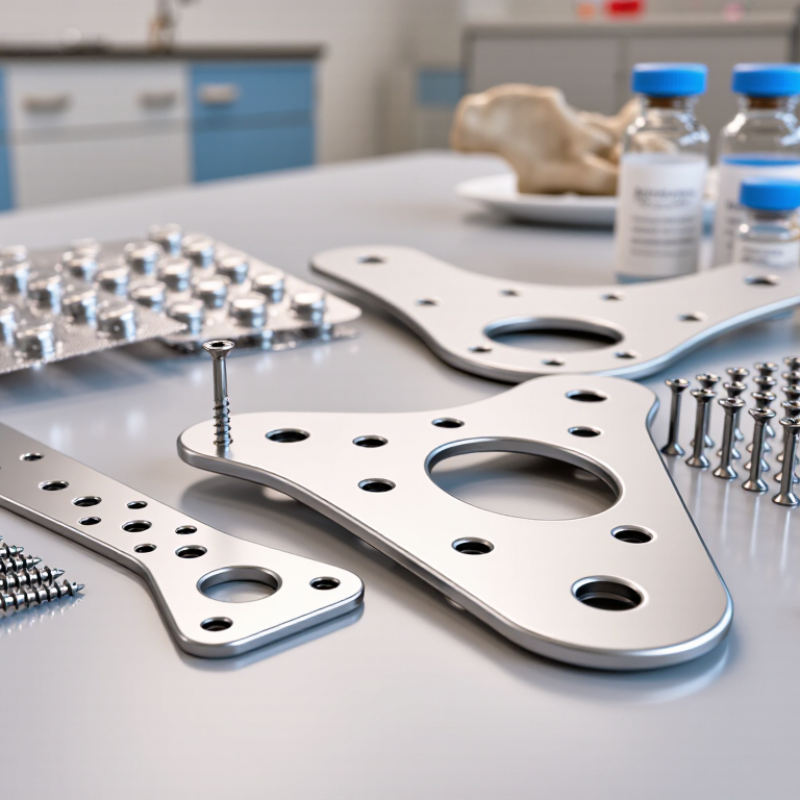
Bone plates are internal fixation devices that stabilize fractures while bone heals. They usually use titanium alloys or surgical stainless steel. Common designs include compression, locking, reconstruction, and anatomical plates. Each design matches a different fracture pattern, screw angle, and surgical technique. The World Health Organization reports that 1.71 billion people live with musculoskeletal conditions worldwide. That figure keeps demand visible, but it does not make every product suitable.
Global supply works through qualified manufacturers, regulatory agents, distributors, and hospital procurement teams. A reliable supplier should provide material certificates, dimensional inspection records, sterilization information, and traceability by lot. ISO 13485 certification supports quality management, yet certification alone is not proof of clinical performance. Buyers must also check registration requirements in each destination market. The U.S. FDA, European regulators, and other authorities may request different technical files and post-market evidence.
Industry forecasts remain useful, but they are not promises. Grand View Research estimates continued growth in the orthopedic implants market through 2030, driven partly by aging populations and trauma care. Freight delays, currency changes, and minimum order quantities can still disrupt a seemingly strong offer. A practical mistake is comparing only unit prices. Hospitals also pay for fitting accuracy, documentation gaps, delayed samples, and rejected shipments.
The best 2026 supplier is therefore the one that balances engineering control, responsive communication, and verifiable compliance. Not the cheapest quote.
Bone plates support fracture fixation, osteotomies, and selected reconstructive procedures. Their design must match anatomy, loading demands, and surgical technique.
Compression plates create controlled pressure across a fracture line. Locking plates connect screws to threaded holes, improving stability in weaker bone. Reconstruction plates bend more easily around complex contours. Anatomical plates reduce shaping during surgery, but their fit is never universal. A small mismatch can affect alignment.
Titanium alloys offer high strength, corrosion resistance, and relatively low weight. They also create fewer imaging artifacts than many steel alternatives. Stainless steel remains valued for its strength and established clinical history. Cobalt-chromium may suit demanding mechanical environments, although handling and imaging considerations require attention. Some systems use resorbable polymers for selected applications, but their indications are narrower.
Orthopedic trauma commonly uses plates for forearm, ankle, clavicle, and long-bone fractures. Maxillofacial plates often require thin profiles and precise contouring. Spinal and small-joint applications demand different geometries and fixation strategies. Material choice matters.
Global buyers should examine mechanical testing, biocompatibility records, dimensional consistency, sterilization compatibility, and traceability. Confirm screw and instrument compatibility before purchase. Supplier documentation should identify applicable regulatory pathways in each destination market. Samples can reveal burrs, poor threading, or inconsistent surface finishing. They should not replace independent clinical evaluation. Even experienced teams can overvalue price, while ignoring training, logistics, and revision support. That judgment deserves another review.
Key bone plate types, materials, and surgical applications
Designed to generate interfragmentary compression and commonly used for suitable transverse or short-oblique fractures.
Locking screws form a fixed-angle construct, which can be useful in osteoporotic bone and metaphyseal or periarticular fractures.
Contoured designs support anatomically complex areas such as the pelvis, clavicle, distal radius, distal femur, and proximal tibia.
The chart compares representative room-temperature Young’s modulus values for materials used in orthopedic implant systems. Actual values vary by alloy, grade, manufacturing process, and test method; material stiffness should not be treated as a clinical performance ranking.
When evaluating bone plate suppliers in 2026, quality evidence matters more than polished presentations. Ask for a current quality management certificate and verify its scope. It should cover the actual manufacturing site, not only a sales office.
Request material certificates for each alloy or polymer grade. Check chemical composition, mechanical strength, surface finish, and lot traceability. A reliable supplier should connect every plate to raw material records, inspection results, and packaging data. Review dimensional drawings carefully. Small differences in hole diameter or plate thickness can affect surgical fit. Independent laboratory testing can confirm fatigue resistance and corrosion performance.
Compliance requires more than a certificate. Examine risk management files, biocompatibility evaluations, process validation, and documented change control. Confirm that the supplier supports the regulatory pathway required in your target market. Ask how complaints, nonconforming products, recalls, and corrective actions are handled. Slow answers are a warning sign.
Visit the facility when possible. Watch how workers control dust, mix lots, label products, and separate rejected components. An audit checklist is useful, but it cannot replace direct observation. Sample several production lots instead of accepting one perfect batch. Packaging also deserves attention, especially where sterilization or long-distance transport is involved.
A supplier may meet formal standards yet still communicate poorly. That weakness can delay investigations and future design changes. Pricing should be reviewed only after quality controls, documentation, and delivery performance are proven. No evaluation is flawless; buyer assumptions should be recorded and challenged before approval.
For global buyers, a bone plate supplier should prove more than machining accuracy. Manufacturing must follow a controlled quality system, preferably aligned with ISO 13485:2016. Critical records should cover titanium grade, heat treatment, dimensional inspection, surface finishing, and nonconformance handling. The WHO Global Guidelines for the Prevention of Surgical Site Infection report a pooled infection incidence of 11.8 per 100 surgical patients in low- and middle-income settings. That figure makes process discipline essential.
Sterilization evidence deserves close review. Suppliers should provide validated cycles under ISO 11135, ISO 11137, or ISO 17665, depending on the method. Records should show load configuration, biological indicators, chemical indicators, and requalification intervals. A sterilization certificate alone is not enough. Packaging should protect plates from scratches, moisture, and particle contamination. ISO 11607 validation should include seal strength, integrity testing, and simulated distribution. Small packaging failures can become expensive clinical problems.
Traceability should reach the individual lot, not only the shipment. Buyers should request raw-material certificates, production dates, equipment history, sterilization records, and final release approval. UDI-ready labeling can improve recall speed and inventory control. However, digital traceability is not automatically reliable. Data entry errors still happen. Supplier audits should test real records, not polished samples. The better question is simple: can one plate be traced from alloy receipt to final package in minutes?
| Evaluation Area | Global Buyer Benchmark | Recognized Standard or Requirement | Objective Evidence to Request | Procurement Assessment |
|---|---|---|---|---|
| Quality Management System | A documented medical-device quality system covering design, production, supplier control, corrective action, and record retention. | ISO 13485:2016; applicable national medical-device regulations. | Current certificate, certification scope, audit history, and site address matching the manufacturing location. | Required |
| Risk Management | Risk controls should address fracture, deformation, corrosion, incorrect sizing, contamination, packaging failure, and loss of traceability. | ISO 14971:2019 for medical-device risk management. | Risk-management file, hazard analysis, risk-control verification, and post-market feedback process. | Required |
| Implant Materials | Material grade, chemical composition, mechanical properties, and biological safety must be defined for each plate family. | Titanium grades may be specified to ASTM F67, ASTM F136, or ISO 5832; stainless-steel grades may be specified to applicable implant-material standards. | Material certificates, heat or melt number, chemical analysis, mechanical test results, and supplier certificates. | Required |
| Manufacturing Process | Controlled CNC machining, forming, deburring, cleaning, passivation or surface treatment, and final inspection. | Validated processes under the supplier’s QMS; process validation principles applicable to medical devices. | Process flow, control plan, equipment qualification, validation reports, calibration records, and batch-release criteria. | Required |
| Dimensional Accuracy | Critical dimensions, hole geometry, contour, thickness, edge condition, and mating features should meet approved drawings and tolerances. | Approved product drawings, inspection specifications, and validated measurement methods. | First-article inspection report, coordinate-measuring-machine data, inspection records, and gauge calibration certificates. | Required |
| Mechanical Performance | Testing should reflect the intended anatomical location, plate design, fixation method, and worst-case configuration. | Applicable ASTM or ISO implant-performance methods; test methods must be justified in the design dossier. | Static and fatigue test protocols, worst-case rationale, raw data, acceptance criteria, and signed final reports. | Required |
| Surface and Cleanliness | Surfaces should be free from visible burrs, embedded particles, residues, oils, and unacceptable discoloration. | Validated cleaning process; biological evaluation according to ISO 10993 where applicable. | Cleaning validation, particulate or residue limits, visual inspection criteria, rinse-water results, and environmental-monitoring records. | Required |
| Biocompatibility | Biological evaluation should consider patient contact type, contact duration, materials, processing residues, and sterilization effects. | ISO 10993 series, with the applicable test strategy determined by risk assessment. | Biological-evaluation plan and report, material characterization, toxicological assessment, and test reports when required. | Required |
| Sterilization Capability | The supplier should identify whether products are supplied sterile or non-sterile and control the selected sterilization process. | Ethylene oxide: ISO 11135; radiation: ISO 11137; moist heat: ISO 17665. | Validated sterilization cycle, sterility-assurance-level justification, dose or cycle records, bioburden data, and release procedure. | Required for sterile supply |
| Sterility Assurance | Sterile products require a documented sterility-assurance process, routine monitoring, and defined product-release controls. | Sterility assurance level commonly established at 10-6 when justified for the device and process. | Routine sterilization-monitoring records, biological-indicator or dosimetry results where applicable, and deviation reports. | Required for sterile supply |
| Sterile Barrier Packaging | Packaging must protect the implant from damage and preserve sterility through handling, transport, and the stated shelf life. | ISO 11607-1 and ISO 11607-2. | Packaging design qualification, seal-strength and integrity testing, process validation, distribution simulation, and aging study. | Required for sterile supply |
| Shelf-Life Validation | Expiration dating should be supported by real-time data or a scientifically justified accelerated-aging program, followed by real-time confirmation where required. | Packaging and sterile-barrier validation under ISO 11607 principles. | Aging protocol, environmental conditions, package-integrity results, functional checks, and proposed expiry period. | Required for sterile supply |
| Labeling and UDI | Labels should identify the product, size, material, lot or batch, manufacturing date where applicable, expiry date for sterile products, and sterilization status. | ISO 15223-1 symbols; ISO 20417 information supplied by the manufacturer; destination-market UDI rules. | Approved artwork, label-control procedure, UDI data records where applicable, and reconciliation records. | Required |
| Lot Traceability | Each finished device should be traceable to raw material, production batch, inspection results, sterilization load where applicable, packaging batch, and release authorization. | ISO 13485 traceability and record-control requirements; destination-market regulatory requirements. | Traceability matrix, device-history record, lot genealogy, serialization or barcode process, and retention policy. | Required |
| Change Control | Changes to material, tooling, software, process, packaging, sterilization, or manufacturing location should be assessed before implementation. | ISO 13485 change-control principles; regulatory submission requirements where applicable. | Change-notification procedure, impact assessment, validation plan, customer-notification rules, and implementation records. | Required |
| Nonconforming Product | Nonconforming implants should be identified, segregated, investigated, and dispositioned by authorized personnel. | ISO 13485 controls for nonconforming outputs and corrective action. | Nonconformance reports, root-cause analysis, CAPA records, rework authorization, and scrap controls. | Required |
| Regulatory Documentation | Documentation should match the importing market and the intended regulatory pathway for the bone-plate system. | Applicable requirements may include EU MDR, U.S. FDA regulations, UK medical-device rules, or other national frameworks. | Technical documentation index, declaration or registration evidence where applicable, device classification rationale, and market-specific certificates. | Market dependent |
| Supply Continuity | Global buyers should evaluate capacity, critical raw-material availability, approved alternate sources, lead times, and business-continuity planning. | Documented purchasing, supplier-control, and business-continuity procedures. | Capacity statement, production lead-time data, safety-stock policy, disaster-recovery plan, and approved-subcontractor list. | Commercial priority |
| Final Supplier Selection | Select suppliers that can provide objective evidence for quality, manufacturing control, sterilization, packaging, regulatory compliance, and end-to-end traceability. | Risk-based supplier qualification and documented technical, quality, and commercial evaluation. | Completed supplier questionnaire, quality agreement, sample approval, audit report, corrective-action closure, and agreed service levels. | Approval gate |
Comparing bone plate suppliers requires more than checking the quoted unit price. Ask for an itemized offer covering plate types, material specifications, packaging, shipping, and any inspection costs. A low price may exclude details that matter later. Request current product documentation and clarify how changes to specifications are approved. For a fair comparison, use the same requirements with every supplier.
Lead times need careful checking. Ask whether the quoted schedule begins after order confirmation, payment, or approval of final specifications. Request separate estimates for production, inspection, and transport, then ask how delays are communicated. A supplier’s recent delivery records can be more useful than a broad promise. Still, records may not predict every order. Build some time into your plan.
Support can be tested before a purchase. Send a specific question about documentation, packaging, or a sample order, and note how clearly the supplier responds. Ask who handles quality concerns and what information they need to investigate them. Keep the replies in writing. A neat spreadsheet helps, but it can hide uncertainty: freight estimates change, and an unclear answer is still unclear. Compare suppliers on price, realistic timing, and the quality of their support, not on promises alone.
Compression plates create pressure across a fracture line. Locking plates improve stability in weaker bone. Reconstruction plates bend around complex contours. Anatomical plates reduce shaping, but their fit is never universal.
Titanium alloys offer strength, corrosion resistance, and relatively low weight. Stainless steel has strong mechanical performance and a long clinical history. Cobalt-chromium suits demanding loads but may complicate handling and imaging. Material choice matters.
Common applications include forearm, ankle, clavicle, and long-bone fractures. Maxillofacial plates usually need thin profiles and precise contouring. Spinal and small-joint procedures require different shapes and fixation strategies.
Review mechanical testing, biocompatibility records, dimensional consistency, sterilization compatibility, and traceability. Confirm that screws and instruments fit the plate system. A sample may reveal burrs, poor threading, or uneven finishing.
Ask for validated sterilization records, load details, indicator results, and requalification intervals. A certificate alone is not enough. The evidence should match the actual production process.
Packaging should prevent scratches, moisture, and particle contamination. Seal strength and package integrity need documented testing. Small packaging failures can create expensive clinical problems.
Traceability should reach the individual production lot. Records should connect raw material, production date, equipment history, sterilization, and final release. Digital records help, but entry errors still happen.
Request itemized quotes for plates, materials, packaging, shipping, and inspections. Confirm when the lead time starts. Compare recent delivery records, written support, and realistic delay communication. A low price may hide missing details.
Ask who handles quality concerns and what evidence they require. Test support with a specific documentation or sample question. Keep replies in writing. Clear answers help, but unclear answers remain a warning.
In 2026, global buyers evaluating Bone Plate suppliers must understand how product design, materials, surgical applications, and international supply chains connect. Bone plates may be produced in different shapes, sizes, and configurations for specific anatomical and orthopedic needs, commonly using carefully selected medical-grade metals or polymers. A reliable supplier should provide consistent manufacturing quality, documented material specifications, appropriate sterilization controls, secure packaging, and complete product traceability from raw materials through delivery.
Supplier comparison should go beyond unit price. Buyers should review quality management systems, regulatory documentation, inspection procedures, production capacity, minimum order quantities, lead times, customization options, and after-sales support. Clear communication is also essential when coordinating international shipping, inventory planning, technical documents, and changing demand. By assessing compliance, manufacturing capability, supply reliability, total purchasing cost, and service responsiveness together, healthcare distributors and medical procurement teams can make more informed decisions and build a stable sourcing strategy for Bone Plate products in the global market.
