Maka Medical Surgical
Choosing the right Surgical Table is a clinical and operational decision, not merely a purchasing exercise. In a busy operating room, the table supports positioning, imaging, sterility, and safe patient transfers. Its performance can affect every minute of a procedure. Surgeons need stable, precise adjustments. Nurses need controls that respond quickly. Biomedical teams need dependable maintenance access. Procurement leaders must also consider training, spare parts, and long-term service support.
A suitable table should match the hospital’s procedures, patient population, and infrastructure. A radiolucent tabletop can support fluoroscopic imaging, while a strong lifting system may serve bariatric care. Sealed surfaces and accessible seams can simplify cleaning between cases. Battery performance matters when power interruptions occur. So does compatibility with existing accessories. Small design details matter. A narrow base may improve staff access. A secure brake may reduce unwanted movement during positioning. These points should be checked through demonstrations, user trials, and documented technical specifications. International safety requirements and local clinical policies must guide the evaluation.
However, no table is perfect. A feature-rich model may increase training demands or repair costs. A lower-cost option may seem practical, yet unavailable parts can create serious delays. Hospitals should record feedback from surgeons, nurses, technicians, and infection-control professionals before deciding. Real experience often exposes weaknesses that brochures hide. The best choice balances safety, usability, durability, and total ownership cost. It should support today’s operating rooms while remaining adaptable to future procedures. That balance requires evidence, honest comparison, and a willingness to reconsider initial preferences.
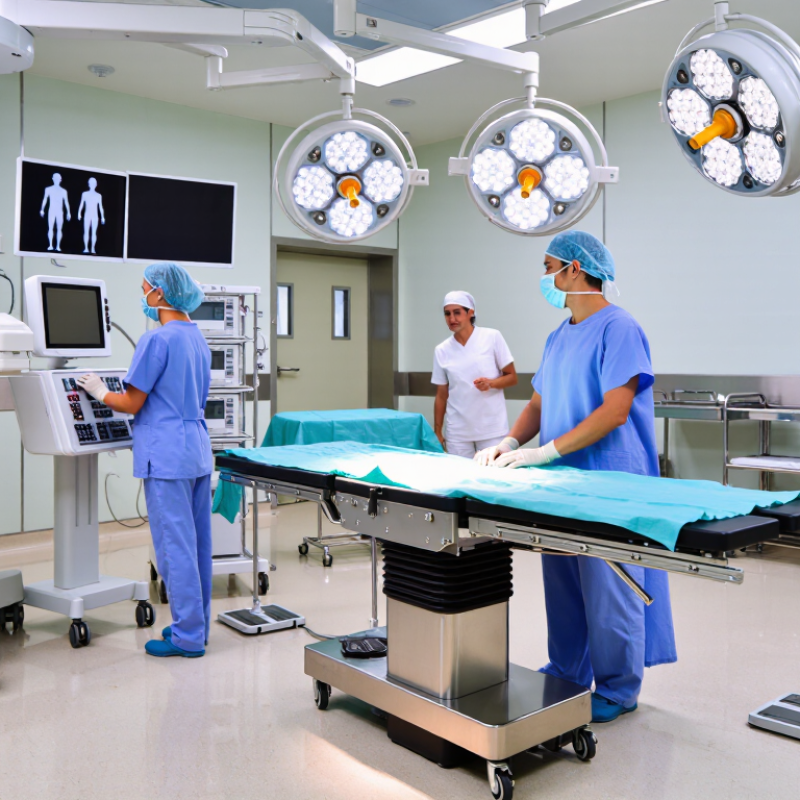
In modern hospitals, surgical tables are more than platforms for patients. They support positioning, access, imaging, and team safety during complex procedures. A stable table helps clinicians maintain alignment throughout lengthy operations. It also reduces unnecessary movement when staff adjust height, tilt, or leg support. Small adjustments matter. Poor positioning may increase pressure on nerves, skin, or joints.
Modern operating rooms often serve several specialties, so flexibility is essential. A table should accommodate general surgery, orthopedics, gynecology, and image-guided procedures. Radiolucent sections can support intraoperative imaging without repeated patient transfers. Weight capacity, locking systems, and electrical controls also require careful evaluation. Nurses and surgeons need controls that respond smoothly, even under time pressure. Cleaning teams need accessible surfaces and seams that do not trap fluids.
Selection should involve surgeons, nurses, anesthetists, infection-control staff, and biomedical engineers. Their daily experience reveals problems that product sheets may miss. A technically advanced table can still frustrate users if setup takes too long. No table solves every problem. Hospitals must consider room size, maintenance access, training, and emergency power. Even careful teams can overlook patient comfort during short procedures. That oversight deserves regular review. Clear inspection routines and documented servicing help keep the table dependable across changing clinical demands.
Choosing a surgical table requires more than checking load capacity or price. Its clinical application should guide the decision. A general operating table supports abdominal, orthopedic, and gynecological procedures. A radiolucent table suits trauma and vascular surgery, where imaging may continue during the operation. A mobile table can help hospitals with shared rooms, although frequent movement may increase setup time and maintenance demands.
Positioning matters greatly. A table with precise height adjustment, lateral tilt, and reliable locking supports safer access during long procedures. In orthopedic surgery, a firm, stable surface helps maintain alignment under traction. For neurosurgery, fine head positioning and low vibration are essential. Pressure management cannot be ignored. The World Health Organization reports that surgical site infections affect up to 30% of patients undergoing inpatient surgery, while poor positioning can contribute to pressure injuries and nerve damage.
Global hospitals also need practical resilience. The WHO Global Guidelines for the Prevention of Surgical Site Infection emphasize safe preparation, workflow, and equipment handling. A table with removable cushions, sealed surfaces, and simple cleaning access supports these requirements. Electrical and mechanical safety should align with IEC 60601-2-46. That standard is useful, not magical. Staff training still matters.
In resource-limited settings, manual tables may outperform complex powered systems when electricity is unreliable. Yet this choice can be shortsighted if procedures become more advanced. Clinical teams should test transfer height, imaging clearance, accessory compatibility, and emergency positioning with real patients or realistic simulations. Small details often decide whether a table truly works.
Why Choose the Right Surgical Table for Global Hospitals?
Assessing Safety, Stability, and Patient Positioning Features
In a busy operating room, the table is part of the safety system, not a passive platform. A stable base reduces unwanted movement during anesthesia, imaging, and delicate procedures. Look for documented load capacity, secure locking, and smooth height adjustment. Small movements matter. Staff should confirm the table’s condition before every case, using a clear checklist. This practical step is often rushed, and that weakness deserves attention.
Patient positioning requires more than a wide, padded surface. Adjustable sections should support supine, prone, lateral, and Trendelenburg positions when clinically appropriate. Pressure-relieving cushions can protect skin, nerves, and blood flow during lengthy operations. Accessible controls help trained teams respond quickly without reaching across the sterile field. However, powered movement is not automatically safer. It needs backup controls, clear indicators, and regular staff practice.
Reliable selection combines clinical experience, technical documentation, maintenance records, and feedback from surgical teams. Check compatibility with imaging equipment, transfer devices, accessories, and cleaning procedures. Safety features should match the hospital’s patients, procedures, and staffing levels. Standards and local requirements also deserve careful review. No table solves poor training or unclear responsibility. That uncomfortable truth should shape procurement decisions.
| Assessment Dimension | Recommended Evaluation Data | Safety and Clinical Significance | How to Verify | Relevant Reference |
|---|---|---|---|---|
| Electrical and mechanical safety | The surgical table should be designed and tested as medical electrical equipment, with documented electrical safety, mechanical safety, and essential-performance requirements. | Reduces the risk of electric shock, unintended movement, structural failure, and hazards during surgery. | Review the conformity assessment file, electrical test reports, risk-management records, and preventive-maintenance schedule. | IEC 60601-1; IEC 60601-2-46 |
| Safe working load | The safe working load must be clearly stated for each table configuration, including the patient, accessories, mattress, imaging equipment, and any attached devices. | Load capacity can change when the tabletop is extended, tilted, or positioned away from the central column. Configuration-specific limits help prevent tipping and structural overload. | Compare the declared load limits with the hospital’s maximum patient weight and planned accessories. Confirm limits during acceptance testing. | Manufacturer technical documentation; IEC 60601-2-46 |
| Base stability and mobility | Evaluate the locking system, castor design, base footprint, floor clearance, braking performance, and stability during extreme tabletop positions. | A stable locked base limits unintended movement and lowers the risk of patient displacement, equipment collision, or staff injury. | Perform brake, steering, movement, and stability tests on the actual operating-room floor surface. | IEC 60601-2-46; hospital acceptance protocol |
| Tabletop positioning range | Record the available height adjustment, Trendelenburg and reverse Trendelenburg range, lateral tilt, back-section movement, leg-section movement, and longitudinal slide. | A broad, controlled range supports different surgical approaches, patient anatomies, and imaging requirements while reducing manual repositioning. | Measure each movement using the table’s control system and confirm that motion remains smooth under the rated load. | IEC 60601-2-46; clinical-use specification |
| Positioning accuracy and control | Controls should provide predictable movement, clear direction indicators, emergency stop access, and protection against unintended activation. | Precise control helps clinicians maintain the required surgical position and reduces the risk of sudden movement or control confusion. | Test hand control, foot control, column control, emergency stop, and backup controls in normal and fault conditions. | IEC 60601-1; IEC 60601-2-46 |
| Patient support and pressure management | Assess mattress thickness, pressure-distribution properties, secure attachment, seam quality, and compatibility with the intended surgical positions. | Appropriate support helps reduce pressure-related tissue injury, nerve compression, sliding, and loss of alignment during lengthy procedures. | Review mattress specifications and assess patient support in supine, prone, lateral, lithotomy, and Trendelenburg positions where applicable. | Hospital pressure-injury policy; clinical risk assessment |
| Patient restraint and accessory compatibility | Check side rails, straps, shoulder supports, leg supports, armboards, headrests, and other accessories for secure attachment and stated load limits. | Correctly selected accessories help prevent falls, sliding, joint overextension, and interference with anesthesia or surgical access. | Verify mechanical fit, locking engagement, accessory load limits, cleanability, and compatibility with the table’s maximum operating position. | IEC 60601-2-46; institutional positioning protocol |
| Radiolucency and imaging access | Evaluate radiolucent tabletop areas, imaging windows, longitudinal travel, metal components, and compatibility with C-arm or other imaging equipment. | Adequate imaging access can reduce repositioning, maintain sterility, and support image-guided procedures. | Conduct a practical imaging test with the hospital’s equipment, accessories, and typical surgical positions. | Clinical imaging workflow; IEC 60601-2-46 |
| Infection prevention and cleaning | Surfaces should be smooth, non-porous, resistant to approved disinfectants, and designed to minimize gaps, seams, and fluid-retention points. | A cleanable design supports standard precautions and reduces the possibility of contamination between procedures. | Compare materials with the hospital’s disinfectant list and review cleaning instructions, contact times, and validation information. | Hospital infection-prevention policy; manufacturer cleaning instructions |
| Battery and power continuity | Record battery type, charging time, operating duration, battery-status indication, mains operation, and manual or emergency positioning capability. | Power continuity helps maintain patient safety during transport, electrical interruptions, or unexpected power-system faults. | Perform battery endurance, low-battery alarm, charging, mains-failure, and emergency-operation tests according to the service plan. | IEC 60601-1; preventive-maintenance procedure |
| Risk management and usability | The supplier should provide documented risk controls, operating instructions, warnings, training materials, and information on foreseeable misuse. | Clear instructions and human-factors controls reduce use errors during time-critical procedures. | Review the risk-management file, usability documentation, user training program, and incident-reporting process. | ISO 14971; IEC 62366-1 |
| Maintenance and lifecycle support | Evaluate spare-parts availability, service intervals, battery replacement requirements, software or control-system support, and local technical training. | Reliable lifecycle support helps preserve safety performance, reduce downtime, and maintain consistent operating-room capacity. | Review the service manual, maintenance checklist, expected response time, calibration requirements, and total cost of ownership. | ISO 13485 quality-system principles; hospital asset-management policy |
| Global operating environment | Confirm compatibility with local mains voltage and frequency, environmental conditions, room dimensions, doorways, elevators, flooring, and local regulatory requirements. | A table that fits the facility and complies with local requirements is more likely to remain safe and usable across different healthcare settings. | Complete a site survey and verify electrical ratings, transport dimensions, operating temperature, humidity limits, and applicable national registration requirements. | IEC 60601-1; applicable national medical-device regulations |
Comparing Materials, Mobility, and Operating Room Compatibility
A surgical table is more than a platform for positioning patients. Its materials influence cleaning, durability, and long-term maintenance. Stainless steel supports frequent disinfection and resists corrosion when properly cared for. High-strength polymers can reduce weight, but their surfaces require careful inspection for scratches. Those small marks may trap contamination.
Mobility also shapes daily workflow. Large, lockable casters can help staff move equipment across uneven floors. A reliable braking system matters during delicate procedures. Height adjustment should remain smooth under clinical loads. Manual controls may be useful when power fails, but they can slow busy teams. Electric systems improve precision, although batteries need scheduled testing. Staff experience often reveals problems that product specifications miss.
Operating room compatibility requires practical assessment. Measure doorways, lift dimensions, ceiling clearance, and surrounding equipment before purchasing. Check whether imaging systems, anesthesia devices, and surgical lights can work around the table. Electrical connections should match local safety requirements and hospital infrastructure. Compatibility with cleaning protocols is equally important.
No table is perfect. A model that moves well may offer fewer positioning options. A highly adjustable design may be heavier and harder to transport.
Clinical engineers, nurses, and surgeons should test the table together, preferably during realistic workflow simulations. Their feedback can expose inconvenient controls, unstable accessories, or maintenance delays before these issues affect patient care.
Selecting a surgical table for global healthcare requirements demands more than checking weight capacity. Operating rooms differ in floor space, power stability, procedure mix, and staff experience. A table must support safe positioning for orthopedic, general, and imaging-assisted procedures. It should move smoothly, lock firmly, and allow clear access around the patient. Small details matter. A poorly placed control can delay urgent adjustments.
Clinical engineers should review load limits, height range, tabletop sections, and accessory compatibility with surgeons and nurses. They can test patient transfers, Trendelenburg positioning, and brake performance during realistic simulations. Test it under pressure. Cleaning teams should inspect seams, pads, and exposed joints. These areas can collect fluid and disinfectant residue. Materials should tolerate the facility’s approved cleaning process without cracking or discoloring. Electrical safety, emergency release functions, and maintenance access also require documented checks. Local regulations and hospital risk policies should guide final approval.
Global deployment adds practical complications. Spare parts may face long shipping delays, while training materials may need several languages. A simple interface helps, but simplicity can hide limitations. This choice is rarely perfect. Hospitals should record failed tests, staff concerns, and near misses before purchase. A table designed for one room may not serve another safely. Sometimes a lower-cost model creates higher costs through downtime, repairs, or repeated staff training. Reliable selection depends on measured trials, transparent service plans, and evidence from comparable clinical settings.
Global hospitals operate in very different resource and case-mix environments. A versatile surgical table should support multiple specialties, dependable positioning, safe patient transfer, radiolucent imaging access, and practical maintenance requirements.
Data source: Meara JG et al., “Global Surgery 2030,” The Lancet, 2015. The study estimated approximately 312.9 million surgical procedures worldwide in 2012 and reported the distribution by World Bank income group.
A stable base reduces unwanted movement during anesthesia, imaging, and delicate procedures. Secure locks matter. Staff should inspect the table before every case.
Suitable tables support supine, prone, lateral, and Trendelenburg positions. Adjustable sections and padded surfaces improve positioning. Clinical appropriateness still guides every choice.
Pressure-relieving cushions may protect skin, nerves, and blood flow. Staff should check pressure points throughout lengthy procedures. Padding is helpful, not magical.
No. Powered movement needs backup controls, clear indicators, and regular practice. Manual controls can help during power failures but may slow adjustments.
Stainless steel supports frequent disinfection and resists corrosion when maintained properly. High-strength polymers can reduce weight. Scratches need inspection because they may hold contamination.
Measure doorways, lifts, ceiling clearance, and space around nearby equipment. Test movement beside surgical lights, imaging systems, and anesthesia devices. Measure twice.
Cleaning teams should inspect seams, pads, joints, and control areas. Surfaces must tolerate approved disinfectants without cracking or discoloring. Residue can collect quietly.
Clinical engineers, nurses, and surgeons should test transfers, brakes, load limits, and positioning. Realistic simulations reveal awkward controls and unstable accessories. Specifications can miss daily problems.
Hospitals should review power stability, local requirements, spare-part access, and training languages. Long shipping delays can increase downtime. A simple interface may still hide limitations.
Yes. Repairs, downtime, replacement parts, and repeated training may raise total costs. Hospitals should record failed tests and staff concerns. The cheaper choice is not always cheaper.
Choosing the right Surgical Table is essential for supporting safe, efficient, and adaptable care in modern hospitals. As a central part of the operating room, it must meet the demands of different surgical specialties while helping medical teams position patients accurately and comfortably. Hospitals should evaluate table types according to clinical applications, including general surgery, orthopedic procedures, imaging-supported operations, and other specialized treatments.
Important considerations include safety, stability, weight capacity, adjustment accuracy, and patient positioning features. Materials should be durable, easy to clean, and resistant to frequent use, while mobility and compatibility with operating room equipment can improve workflow and space management. For global healthcare requirements, hospitals should also consider infrastructure, maintenance capabilities, staff training, and long-term reliability. A carefully selected Surgical Table can enhance operating room performance, support consistent clinical practices, and provide a practical solution for hospitals with diverse patient needs and healthcare environments.
